
FrequentlyAskedQuestions
Why do Utah and the surrounding region need nuclear power?
Nuclear power provides some of the most stable base load sources of power in the U.S. Furthermore, nuclear power production costs have been at or below the national average of coal and natural gas fired power plants during the last decade. However, there have been only a few nuclear power plants built in the west. Of the 99 commercially operating nuclear power reactors in the U.S., only six are located in the west.
Utah and the Western Region have significant need for new electricity resources. Utah is one of the primary areas that would benefit from new base load nuclear electrical generation. The North American Electric Reliability Corporation (NERC) projections regarding demand for electricity in the Western Region show the following growth in the next nine years (2015-2024): 13% in Oregon, Nevada, Utah, and Idaho, 14% in Kansas and South Dakota, 18% in Arizona and New Mexico, and 2% in California.
Additional pressure for new electric resources in the west is materializing because of coal plant retirements and essentially no new coal plant construction. The recent changes to the EPA emissions standards for coal fired power plants has already resulted in the closure of several plants. Furthermore, approximately 13,000 megawatts of capacity near the Blue Castle Project site are projected to be retired by 2040. The total projected lost capacity due to these retirements is more than four times larger than the proposed capacity of the Blue Castle Project.
The value proposition of new nuclear can be represented by comparing projected electricity costs from the most likely new base load alternatives-natural gas. A new coal resource is not included in this comparison because of the low probability that such a project could successfully be permitted in the foreseeable future.
PacifiCorp (the parent of Rocky Mountain Power) has projected the range of costs for electricity produced with natural gas to be anywhere from slightly higher than nuclear power to as much as double the cost of nuclear electricity when gas is used in plants that are not base loaded. Natural gas is the only dual use fuel used by electric generators and presents business risks that are extremely difficult to contain and manage. In the early 2000s, gas market volatility caused the collapse of the merchant natural gas generating industry. However, the lower initial capital cost and short construction time makes natural gas a continuing option for some utilities, especially with the current low marketplace cost of gas. The importance of fuel diversification and price predictability for a region like Utah should not be underestimated, making nuclear power a natural option for inclusion in the state energy portfolio.
What are the considerations for water use?
The proposed Blue Castle Project would increase the electricity generated in Utah by approximately 50%, adding about 3,000 megawatts of installed electrical capacity, using less than 1% of Utah’s current water diversion, and with a very favorable state-wide economic impact.
World Nuclear Association – Cooling Power Plant PDF Document – (Compares water use in different types of power plants)
Blue Castle Project Water Use And Key Economics Study PDF Document
Nuclear power uses approximately the same amount of water for cooling as coal fired power plants. The use of cooling water by power plants preserve the water rights of conservancy districts for future uses by proving beneficial use. Beneficial use is required by state law to preserve a water right. After a nuclear power plant has run its useful life of approximately 60 to 80 years, the water rights used by the plant can then be used for other water needs by the population at that time.
The Blue Castle site is well suited for a new nuclear power plant. The Upper Colorado River Basin is a place where Utah needs to put water to use. Utah currently has about 360,000 acre feet annually of unused water in this area. A large portion of this unused water is held by multiple county water conservancy districts who have been trying to put the water to use since the mid 1960’s to conserve water rights.
The Blue Castle Project has leased water rights for 53,600 acre feet per year, already approved by the Utah State Division of Water Rights for coal fired power plants. These coal plants were never built and years later the water remains unused.
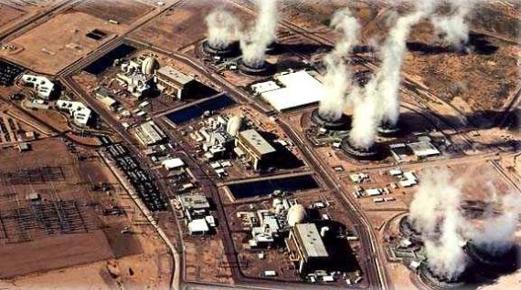
Data records for flow at the USGS Gauging Station at Green River, UT provided the following information on flow in the Green River approximately three miles upstream of the site:
- Highest Daily Mean Discharge = 66,700 cfs (June 27, 1917)
- Lowest Daily Mean Discharge = 380 cfs (December 5, 1934)
- Annual Average Discharge = 6,071 cfs
- Highest Annual Average Discharge = 12,280 cfs (1907)
- Lowest Annual Average Discharge = 1,805 cfs (1934)
Nuclear plant vendors estimate that the makeup water requirement is in the 60 – 90 cfs range. Therefore, withdrawal requirements for a two-unit plant at the site would be a small fraction of the historical low flow in the Green River, and even a smaller portion of the median flow. There is more than enough water available from the Green River to support several nuclear power plant units and other planned uses. (See Deseret News story from 11/27/13 “Judge upholds state engineer’s decision on nuclear power plant water”).
The statements above show that utilizing the water rights for new nuclear power plants would be beneficial to the water right holder and the State. In essence, these actions will utilize the State water appropriately and preserve the water right for Utah’s needs in the future. When the plant is done using the water rights in about 60 to 80 years, the water will return to these conservancy districts for use as they deem fit.
How does nuclear power affect the environment?
Nuclear power is environmentally benign, and therefore, its operation has little impact on the environment. Nuclear power has essentially a zero emissions burden on a small total footprint.
Nuclear power plants comply with the requirements and expectations of the Clean Air Act of 1970, which set standards to improve the nation’s air quality. Because they generate heat from the fission process, they produce no gases or particulate emissions associated with burning fuel during operations.
About 33% of America’s electricity comes from clean-air sources, including nuclear power plants, hydroelectric plants, and wind and solar energy facilities. Nuclear power plants generate about 20% of U.S. electricity, or about 60% of the entire nation’s clean-air electricity generation. By replacing other fossil fuels used for generation of electricity, nuclear energy has significantly reduced U.S. emissions of air pollutants and gases.
Nuclear energy is the only large-scale, base load, clean electricity source that can be expanded widely to produce the large amounts of energy needed in the U.S.. In 2011, U.S. nuclear power plants prevented the emission of nitrogen oxides and sulfur dioxide-pollutants controlled under the Clean Air Act-by 0.5 million short tons and 1.4 million short tons, respectively. The amount of nitrogen oxide emissions that nuclear plants prevent annually is the equivalent of taking more than 28 million passenger cars off the road.
Environmental stewardship is an important part of nuclear power plant management. The companies that operate nuclear power plants comply with all environmental requirements imposed by federal and state laws, and voluntarily work to protect the environment, water supplies, nearby wildlife and their habitats.
What will be done with the spent fuel?
Used fuel is only waste if it is not reprocessed or recycled; it contains important energy and industrial materials, as well as non-usable residues. Used reactor fuel is still very valuable. It has about 95% of its initial energy that can be reprocessed or recycled to generate more electricity in the future. For this very reason, it makes sense to utilize used fuel in a manner that will benefit the nation and protect public health and safety. Exercising available options for utilizing the used fuel and permanently store the radioactive residues are prudent to the nation’s energy future and environmental stewardship.
There is no current scientific, economic, or safety rationale requiring the near term movement of spent fuel from the nuclear power plants where it is generated. This has been the case since the first commercial nuclear power plant began operation in 1957. The Nuclear Regulatory Commission has concluded that spent fuel is safe to store on site for 100 years or longer.
Used nuclear fuel is contained in a very small volume of high density materials, consisting of ceramic uranium fuel pellets incased in metallic tubing. All the used nuclear fuel produced by the U.S. nuclear energy industry in nearly 50 years-if stacked end to end-would cover an area the size of a football field to a depth of less than 10 yards (Source: Nuclear Energy Institute). The Blue Castle Project will have spent fuel storage facilities able to provide over 100 years of safe and secure storage in the reactor building. Used or spent fuel can be stored on the Blue Castle site, or any other suitable site, in dry casks for very long periods of time. A 60 year batch of used fuel from a two-unit 1,600 megawatt nuclear power facility, like the Blue Castle Project, will fit on 1 ½ acres.
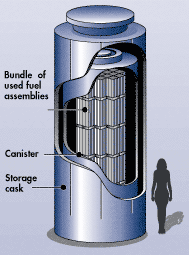
Typical Dry Cask Storage System
At most nuclear reactors across the country, spent fuel is or will be kept on site, above ground, in systems basically similar to the ones shown here. Once the spent fuel has cooled in water-cooled fuel pools, it is loaded into special canisters. Each canister is designed to hold approximately two-six dozen spent fuel assemblies, depending on the type of assembly. Water and air are removed from the canister. The canister is filled with inert gas, and sealed (welded or bolted shut).
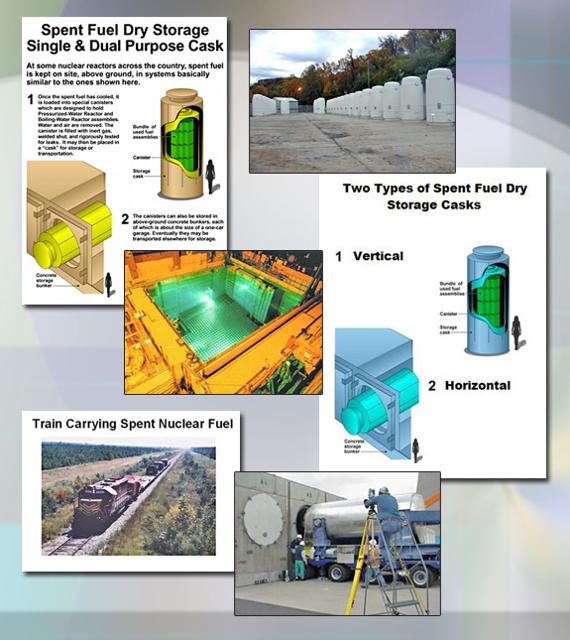
Eventually, after its radioactivity has significantly decayed during its estimated 100 years in storage, the spent fuel would be transported to be reprocessed or stored at an offsite facility. The transportation safety record of the nuclear industry is excellent. Past U.S. shipments of spent fuel have covered 1.7 million miles with no resulting injuries, fatalities or environmental damage.
The nuclear industry is one of the safest industries in the world. It is a fact that the U.S. nuclear industry has accumulated almost 3,400 reactor years of operations without serious injury or death to a single member of the public, and that encompasses the period including the Three Mile Island nuclear accident (1979).
Where is the Blue Castle site?
The Blue Castle site is located about five miles west-northwest of Green River, Utah in Emery County. BCH engaged an experienced firm to conduct a preliminary evaluation of the Blue Castle site with regard to the site’s potential suitability for development of a commercial nuclear power plant. The firm has extensive involvement in nuclear power plant siting throughout the continental U.S.; at the time of the evaluation this firm had conducted site selection studies for more than half of the announced nuclear plant sites in the U.S. (thirteen siting studies, with a total of more than 100 sites evaluated).
The following specific issues were examined:
- Flooding potential
- Water availability
- Nearby hazardous land uses
- Geology/seismology
The evaluation indicated that there were no fatal flaws at this site and that the Blue Castle site could likely meet all of the NRC requirements for licensing two new nuclear reactors. The licensing process will require significant data collection and analysis spanning five years with costs in the tens of millions.